United Playgrounds is a group of creative and digital agencies, Mach8 among them. Every agency worked with the same shelf of separate tools: a CRM for the pipeline, a tool for planning, another for projects and hours, plus spreadsheets and home-built apps around them. We replaced that shelf with one system of our own: UP-OS. It is our own Company OS, and the proof that the approach works.
The problem: the same data in five systems
A lead lived in the CRM, the project in the planning tool, the hours in a third system and the invoice in a fourth. People spent a good part of their week retyping information: putting client details into the planning, copying hours into a finance sheet, pasting a project update into an email. Every copy was a chance for mistakes, and every tool was another login and another per-seat licence.
One system, from first contact to invoice
In UP-OS, the company you meet, the offer you send, the project that follows, the hours booked against it and the revenue it earns are the same data. Win a deal and it becomes a project automatically, brief included. Log hours and the finance dashboards update themselves. Complete a milestone and the client sees it in their own portal.
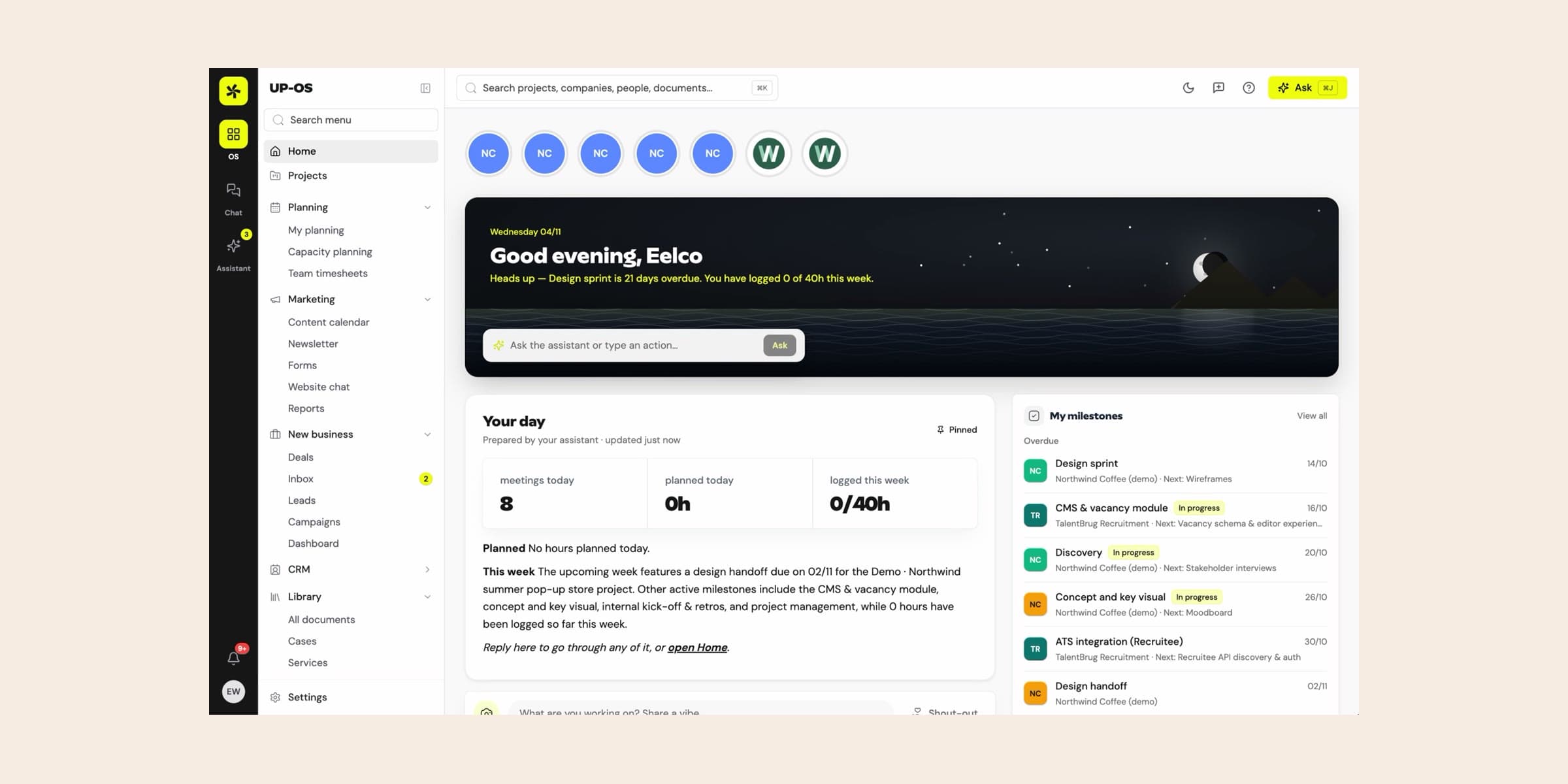
Everyone starts the day on their own home page, with a briefing the assistant prepares: which meetings are coming up, which milestones are behind and how many hours have been logged this week.
An assistant that knows the whole business
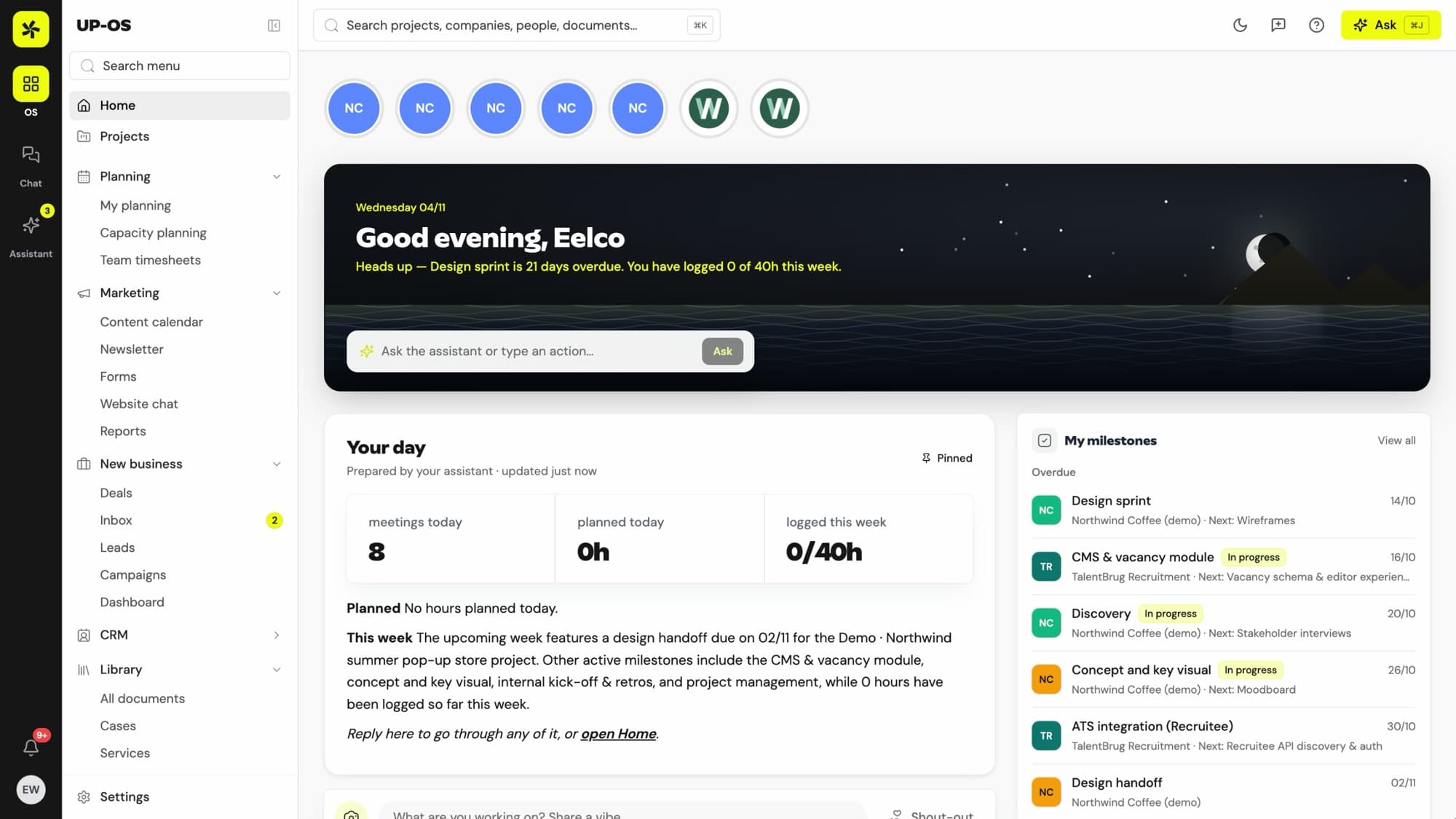
Because everything lives in one system, the AI assistant can answer questions across the whole business. Ask on a project which milestones are at risk and what to do first, and it looks at the tasks, the planning and the logged hours itself, and comes back with a concrete proposal.
The assistant proposes, people decide. Actions that change something, such as sending an email or changing a plan, wait for approval. What someone can see and do depends on their role: a planner can move hours, finance sees margins, and sensitive numbers stay with the people who should see them.
New business, from lead to meeting
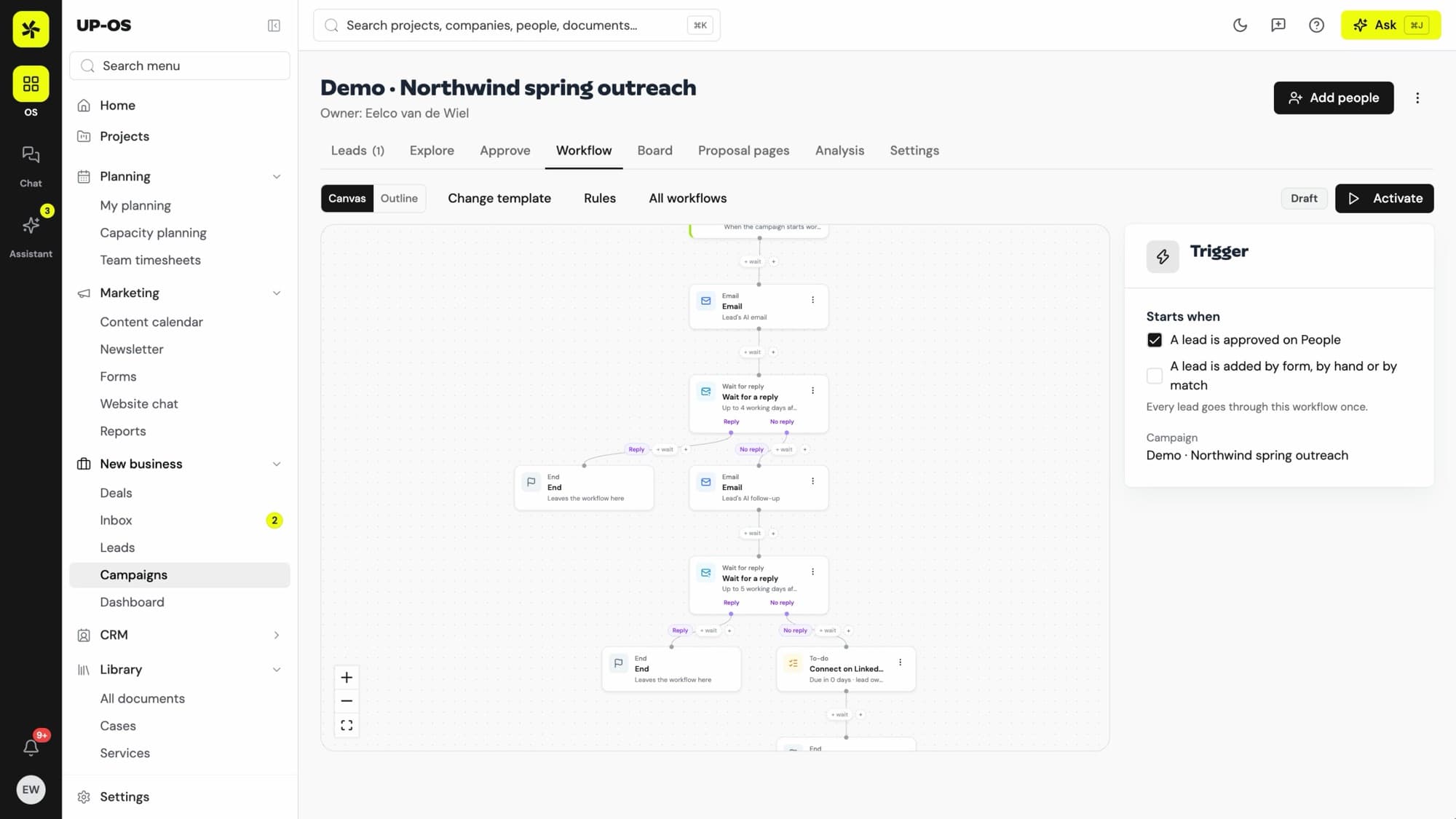
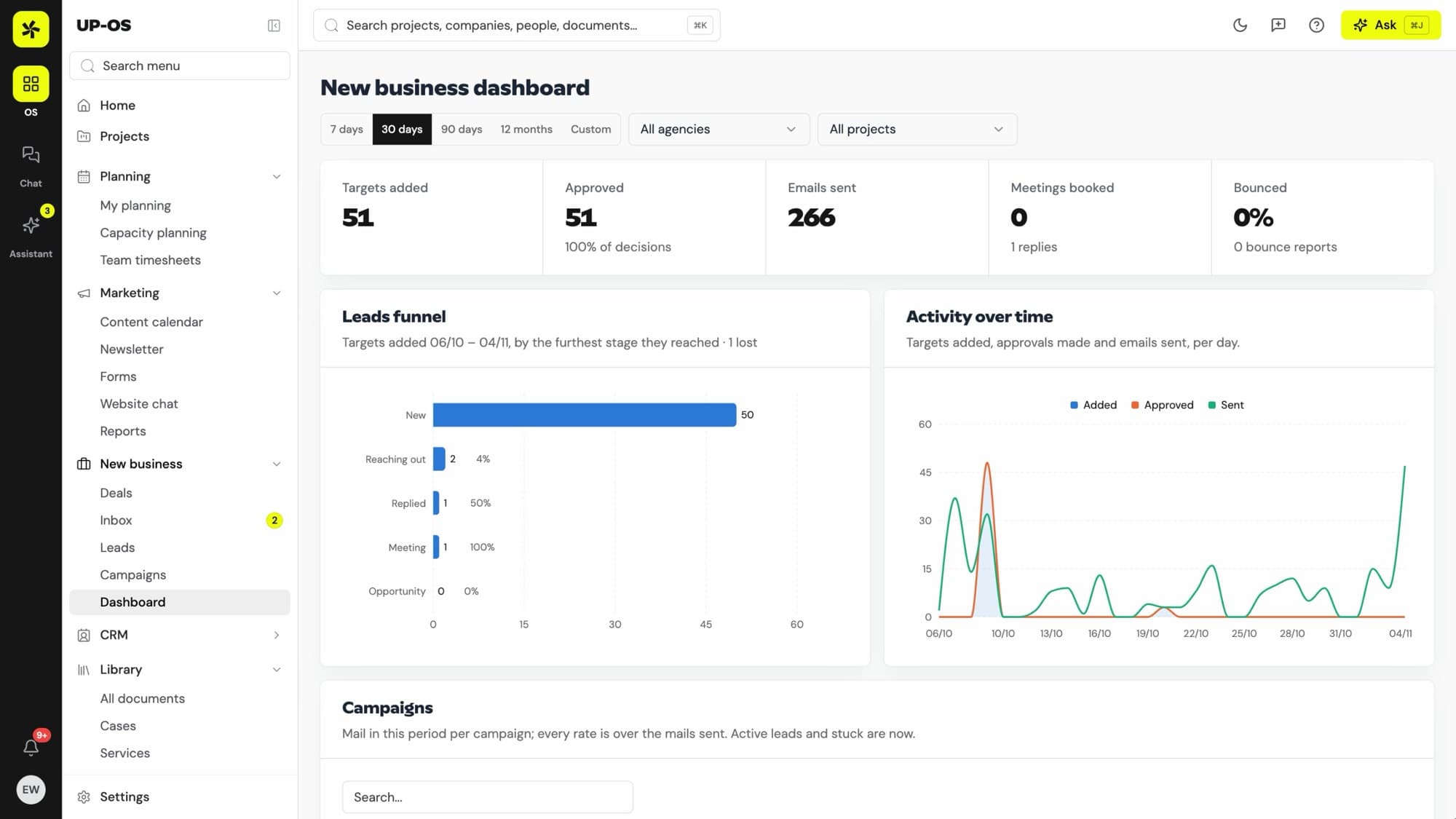
The sales team works in the same environment. AI researches new companies, finds the right contacts and writes a first email for each person. A workflow decides what happens next: wait for a reply, send a follow-up, or create a task to connect on LinkedIn. The dashboard shows how many leads were added, what was sent and what leads to a meeting.
On top of what stays
UP-OS doesn't replace everything. Accounting stays in Exact, payroll in SD Worx, and email and calendar in Google. UP-OS connects to them and pulls in existing data, so the switch could happen process by process instead of all at once. Tools like Teamleader, Forecast and HubSpot are folded in step by step.
What it shows
- One source of truth. Sales, delivery and finance work with the same data, without retyping.
- AI inside the system, not next to it. The assistant knows projects, planning and clients, and works within the user's permissions.
- Built in months, not years. With AI as a development partner, we built a system that used to take a large team a year.
We use the same approach for other organisations: a Company OS of their own, built on what they already have.